

In this week’s episode of the Mental Fitness Technique series, here are the key takeaways that you can expect:
- What guided imagery is and why it’s an effective relaxation tool
- Science-backed benefits for reducing stress and lowering heart rate
- Step-by-step guidance to create your own “happy place” visualization
- How BloomPal’s guided imagery library helps you practice anytime
Feeling Stressed? Here’s a Simple Way to Find Calm Fast
Busy days, tight deadlines, and constant noise can leave your mind overwhelmed. Have you ever wished you could just “escape” to a peaceful spot to reset? Guided imagery lets you do exactly that, use your imagination to mentally visit a relaxing place and calm your body within minutes.
If you’ve tried the exercises in our Box Breathing or The Science Behind Mindfulness: How It Affects the Brain posts, then guided imagery offers another powerful, easy-to-learn technique to boost your emotional resilience and reduce stress when life feels chaotic.
Before diving into the details, let’s first explore what guided imagery is and how it works as a relaxation tool.
What is Guided Imagery?
Guided imagery means closing your eyes and picturing a place that feels safe and calm. For example, close your eyes and imagine a beach where the waves gently lap, a quiet garden filled with flowers, or even a cozy corner in your home. The key is to make your mental image vivid by involving all your senses:
- Sight: Notice colors, shapes, and light.
- Sound: Hear birdsong, rustling leaves, or gentle water.
- Touch: Feel the warmth of the sun or a cool breeze on your skin.
- Smell: Imagine the scent of fresh flowers or salty air.
This immersive experience activates your body’s natural relaxation response, slowing your breathing and heart rate within minutes.
Now that we’ve defined guided imagery, it’s helpful to understand the different types of imagery you can use to tailor your practice.
Types of Guided Imagery
Guided imagery is a versatile practice with several variations that cater to different needs and preferences.1,2
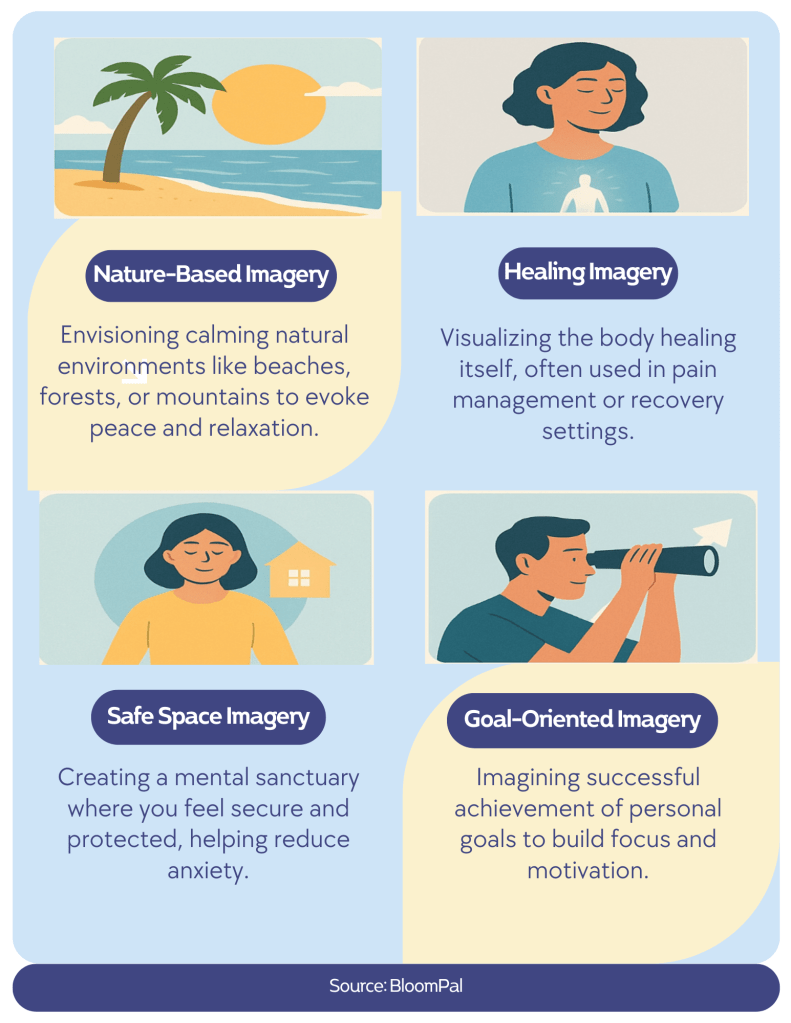
Exploring these different forms allows you to personalize your practice, finding the imagery that best resonates with your emotions and needs. Whether it’s a sunny garden or a quiet mountain cabin, the key is choosing scenes that feel comforting and restorative for you.
With these varieties in mind, let’s look at the science behind why guided imagery is such an effective method to reduce stress and promote calm.

Photo by FreePik
Why it Matters: The science-backed benefits of Guided Imagery
Guided imagery has been shown by research to significantly reduce stress and lower heart rate within minutes of practice. For example, a 2023 study published in the Sensors Journal found that guided imagery increases alpha brain wave activity, which is linked to relaxation and improved focus, leading to measurable reductions in stress and anxiety.3
Additionally, a 2018 study in the Frontiers in Psychology compared guided imagery to yoga and reported that both methods effectively lowered heart rate and relaxed the body. These benefits occur because vivid mental visualization activates the body’s relaxation response, decreasing physiological markers of stress such as heart rate and blood pressure, and supporting emotional well-being. This scientifically supported technique can be a powerful tool for quick stress relief, with long-lasting benefits for overall health.4,5
Understanding how guided imagery impacts your mind and body sets the stage for creating the best environment to practice it effectively.
Tips for Optimal Guided Imagery Practice Conditions
To make the most of your guided imagery practice, setting up optimal conditions is essential:
- Find a quiet, comfortable space: Choose a spot where you won’t be interrupted. You can sit in a chair or lie down, whichever feels more relaxing.
- Use headphones if possible: This helps block out distractions and immerse you fully in the imagery and any audio guidance.
- Begin with deep breathing or progressive relaxation: Take a few slow, deep breaths or tense and release your muscles to ease physical tension before starting.
- Start short and build gradually: Begin with sessions of 2–5 minutes, increasing time as you become more comfortable with visualization.
- Practice regularly: Consistency helps deepen your ability to focus and relax with imagery.
Pairing these conditions with your visualization increases the effectiveness of the relaxation response and allows your mind to engage more fully in the calming experience.5,6
Once you have your space ready, here’s a simple, step-by-step guide to help you build your own ‘happy place’ visualization.

Photo by FreePik
How to Build Your Own “Happy Place” Visualization
Ready to try? Here’s a simple way to start practicing guided imagery right now:
- Find a quiet spot and sit comfortably.
- Turn on an audio from BloomPal’s library of guided imagery audio
- Close your eyes and take a few slow, deep breaths.
- Imagine a place where you feel completely safe and peaceful. Don’t rush—let the scene become clear.
- Use your senses to paint a detailed picture: What do you see, hear, feel, and smell?
- Stay here for 2–5 minutes, breathing slowly and bringing your focus back if your mind wanders.
- Open your eyes slowly, carrying a sense of calm with you.
Try BloomPal’s Guided Imagery Feature
To make this practice even easier, BloomPal offers a curated library of guided imagery audio sessions designed to walk you step by step through the process of building your “happy place.” Each session combines gentle narration with soothing nature sounds or calming music, helping you immerse yourself fully in your visualization even if you’re new to the technique. You can personalize your favorite scenes in the BloomPal app, bookmark the ones that resonate most, and use daily reminders to help make guided imagery a consistent, stress-reducing habit—anytime and anywhere.
Try using this “happy place” whenever you feel anxious or stressed; it’s your mental refuge anytime and anywhere.
Long-term Benefits of Guided Imagery
Guided imagery isn’t just for immediate stress relief; it offers powerful, long-lasting benefits when practiced consistently. Over time, regular imagery practice helps:
- Build emotional resilience, improving how you respond to future stressors.
- Enhance sleep quality by calming the nervous system before bedtime.
- Boost focus and concentration by training your brain in mindful attention.
- Support overall mental and physical well-being by lowering chronic stress markers like heart rate and blood pressure.
To unlock these benefits, consider integrating guided imagery into your daily self-care routine. Just a few minutes each day can create meaningful change in your mood and health.1
Try BloomPal! Give Your Mind a Rest—Start Visualizing Calm Today
Stress is unavoidable, but how you respond to it can change your whole experience. Guided imagery offers an accessible, research-supported way to slow down, breathe deeply, and shift your mind from chaos to calm—no matter where you are.
We invite you to be ampng the first people to try a guided imagery session on BloomPal and see how it transforms your stress moments. Sign up here for the BloomPal beta shortlist, your “happy place” is ready whenever you are.
References:
- Katz, J. M. (2024, September 18). Holistic healthcare techniques: The role of guided imagery. AIHCP Blog. https://aihcp.net/2024/09/19/holistic-healthcare-techniques-the-role-of-guided-imagery/
- Positive Psychology guided imagery overview
Miller, L. (2025). What is guided imagery & how can it help your clients heal? Positive Psychology. https://positivepsychology.com/guided-imagery/ - Sensors Journal 2023 study (guided imagery brain waves and benefits)
Buric, I., Farias, M., Jong, J., Mee, C., & Brazil, I. A. (2023). Quantifying the effects of guided imagery on alpha brain wave activity: A randomized controlled study. Sensors, 23(13), 6210. https://doi.org/10.3390/s23136210 - Frontiers in Psychology 2018 study (guided imagery vs yoga for heart rate reduction)
Kan, L., Lipnicki, D. M., & Su, J. (2018). Relaxation techniques including guided imagery and yoga: Physiological and psychological effects. Frontiers in Psychology, 9, 2192. https://doi.org/10.3389/fpsyg.2018.02192 - WebMD guided imagery basics and benefits
WebMD. (2024). What to know about guided imagery. https://www.webmd.com/balance/what-to-know-about-guided-imagery - BetterUp article on guided imagery for stress
BetterUp. (2025). What is guided imagery for stress? https://www.betterup.com/blog/what-is-guided-imagery-for-stress
 Contact
Leave a comment